DEEP RESEARCH · DONGYANG PISTON DYP
Dongyang Piston (DYP): Ford España and the Re-rating of a Hybrid Cash Cow
An ambidextrous strategy that moves beyond the internal-combustion decline narrative into hybrid, hydrogen, and EV thermal components
0. Bottom line first
The point is not that pistons are finished. It is that the hybrid cash cow may last longer than the market expected. The February 4, 2026 Ford España supply contract, tied to Valencia’s hybrid bridge strategy, forces a fresh look at DYP’s technology and cash-flow runway.
Official fact: The source says Dongyang Piston was founded in June 1967, is headquartered in Ansan’s Banwol Industrial Complex, and diversified customers to BMW, Audi, Chrysler, Ford, and others to become a global Top 4 piston maker.
Interpretation: The EV chasm and OEM hybrid-plan revisions can create not just life extension but a high-margin harvest period for selected ICE suppliers.
1. Business structure
The post locates DYP’s edge in tribology, metals, gallery cooling, and low-friction coating. Hybrid engines face frequent cold starts and thermal shock, so reliability requirements can be higher than in conventional ICE applications.
2. Governance and cash flow
| Item | Source figure or description |
|---|---|
| Largest shareholder | CEO Yang Jun-gyu, about 23.46% |
| Second shareholder | Hong Kyung-sook, about 14.88% |
| Founder | Chairman Hong Soon-kyum, 8.15% |
| 2024 3Q cumulative | Revenue KRW 267.3 billion, up 9.3% YoY; operating profit KRW 13.1 billion |
| China subsidiary | Revenue up 14.4% and operating profit up 130.6% |
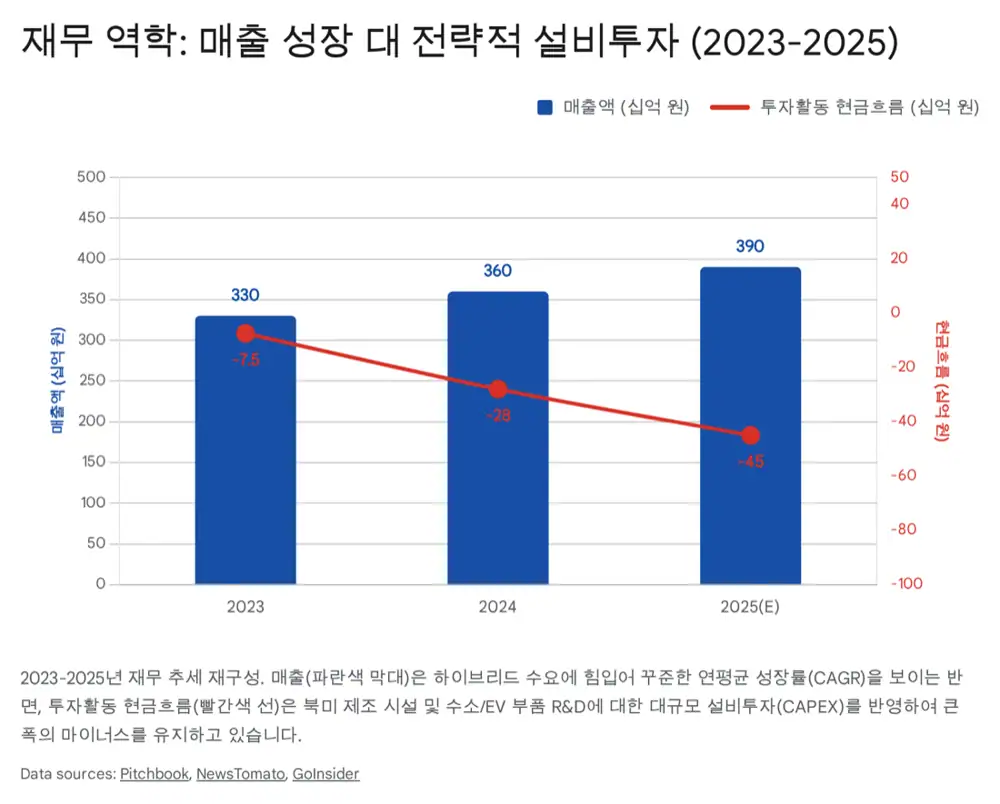
The source describes operating cash flow as a stable KRW 20-30 billion per year, while investing cash flow stayed deeply negative because of North American capacity and hydrogen/EV R&D.
3. Meaning of the Ford España contract
Official fact: The source analyzes the target item as pistons for Ford’s 2.5L Duratec Atkinson-cycle engine, the core engine for Kuga PHEV and hybrid models.
Ford’s Valencia plant in Almussafes is a key European production base. The post frames the contract as a beneficiary of Ford adjusting its BEV-only transition and maintaining Kuga hybrid and PHEV output into the early 2030s.
2.5L Atkinson piston
Thermal-shock resistance matters in a hybrid engine paired with an electric motor.
Ford Valencia
The source analyzes delivery to Almussafes under a just-in-time structure.
5-7 years
The post argues automotive component contracts can support supply through the model lifecycle.
The post suggests shipment from Busan or Pyeongtaek, through the Suez Canal and Mediterranean to Valencia Port, then truck delivery to Almussafes. It cites about 30-40 days of sea transit.
4. Policy and competition
- Electrification pacing: slower regulation and charging-infrastructure gaps extend hybrid demand.
- IRA and USMCA: North American sourcing rules make Mexico and U.S. sites strategically important.
- Hydrogen reboot: Wooshin’s NEXO-verified enclosure technology could expand into next-generation FCEVs and commercial vehicles.
- Competitor exit: Mahle, Rheinmetall, Tenneco, and others reducing ICE investment can benefit committed remaining piston suppliers.
5. Risks and checks
Interpretation: The main risk is the lag between investment and harvest. North American CAPEX and R&D come first; Ford revenue and new capacity come later.
- Confirm whether Ford Valencia plans translate into actual volumes.
- Production routing between Ansan and Mexico will affect cost and lead time.
- Hydrogen and EV thermal components must become the next revenue base after hybrid demand peaks.
Sources
- Source 1: https://m.blog.naver.com/PostView.naver?blogId=star_of_self&logNo=224171660195
- Source 2: https://tracxn.com/d/companies/dong-yang-piston/__jkfVRAG6Ah81ty_5SCvRPZ3977XZAdfKeI8LhJB7UcQ
- Source 3: http://www.dypiston.co.kr/eng/page/?pid=history
- Source 4: https://kr.investing.com/news/economy/article-120450
- Source 5: https://www.komachine.com/companies/dong-yang-piston
- Source 6: https://file.alphasquare.co.kr/media/pdfs/company-ir/20181128%EB%8F%99%EC%96%91%ED%94%BC%EC%8A%A4%ED%86%A4,%20%EC%B9%9C%ED%99%98%EA%B2%BD%20%EC%88%98%EC%86%8C%EC%A0%84%EA%B8%B0%EC%B0%A8%20%EC%82%AC%EC%97%85%20%EC%A7%84%EC%B6%9C.pdf
- Source 7: https://www.newstomato.com/ReadNews.aspx?no=933450
- Source 8: https://pitchbook.com/profiles/company/223070-23
- Source 9: https://pestel-analysis.com/blogs/target-market/pistongroup
- Source 10: https://goinsider.kr/stock/00117726
- Source 11: https://corporate.ford.com/operations/locations/global-plants.html
- Source 12: https://media.ford.com/content/fordmedia/feu/gb/en/news/2021/03/25/ford-continues-to-go-all-in-on-electrification-with-new-hybrid-e.html
- Source 13: https://media.ford.com/content/fordmedia/feu/en/news/2025/12/09/Ford-Announces-Next-Phase-of-European-Strategy.html
- Source 14: https://www.inovev.com/index.php/en/market-analyses/category-blog/21715-2025-28-7
- Source 15: https://www.mavericktruckclub.com/forum/threads/hybrid-engine-manufactured-where.7919/
- Source 16: https://www.just-auto.com/news/ford-to-axe-1600-more-valencia-jobs/
- Source 17: https://news.einfomax.co.kr/news/articleView.html?idxno=4395678