DEEP RESEARCH · Thezen
Thezen: The Hidden Platform Behind Digital Finance Infrastructure
B2B financial infrastructure expanding from firm banking and virtual accounts into apartment ERP, messaging, and FX
0. Bottom Line First
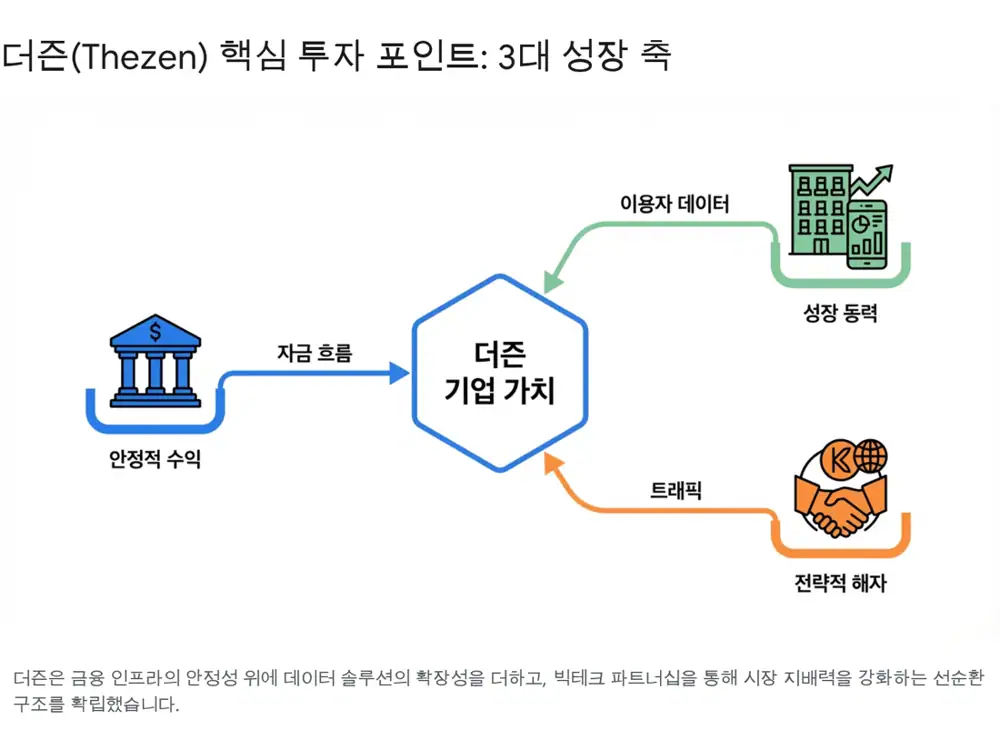
Thezen is a company that connects money and data behind the apps consumers see. The key question for me is whether it can build platform-style revenue on top of stable financial back-end infrastructure by adding ERP, messaging, and FX.
- The company is described as founded in November 2017 and listed on KOSDAQ in March 2025, gaining both capital and credibility.
- As of 3Q 2025, revenue mix was presented as 35.5% digital banking, 31.5% data solutions, and 20.9% FX solutions.
- Messaging-service revenue was presented as KRW 14.2 billion for cumulative 3Q 2025.
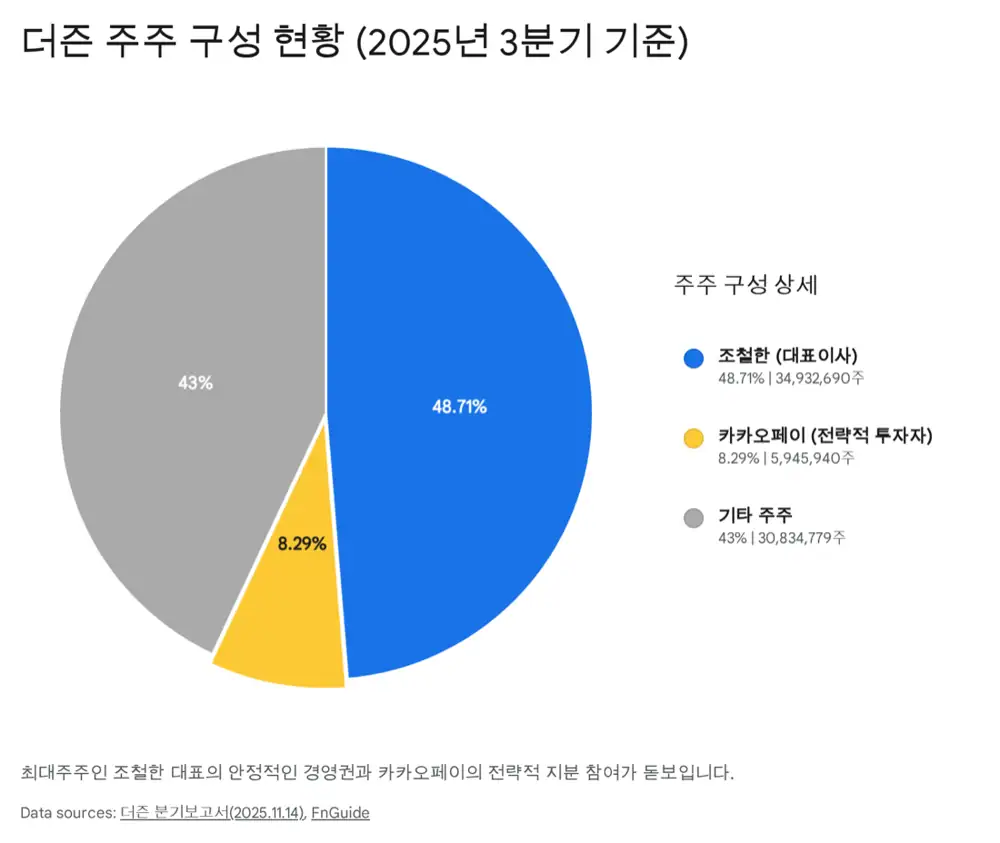
- CEO Cho Cheol-han’s 48.71% stake and Kakao Pay’s 8.29% stake are presented as strategically important.
1. Business Portfolio
Digital Banking
Financial-network services such as firm banking, virtual accounts, and account-holder verification. This infrastructure supports money flows for customers such as Coupang, Naver Financial, and Kakao Pay.
Data Solutions
This includes The Apartment ERP, enterprise messaging, and Kakao Pay partnership services. ERP’s low churn and message volume create recurring-revenue characteristics.
FX Solutions
Cross-border settlement and unmanned currency-exchange kiosks. The growth logic is tied to post-pandemic travel recovery and cross-border commerce.
2. Kakao Pay and Lock-In
Official fact: As of 3Q 2025, Kakao Pay is mentioned as the second-largest shareholder with an 8.29% stake.
Interpretation: If Kakao Pay’s bill, money-transfer, and authentication transactions increase Thezen’s infrastructure usage fees and commission revenue, the stake has strategic meaning beyond a simple financial investment.
3. Revenue Quality and Competitive Position
| Area | Revenue model | What investors should watch |
|---|---|---|
| Firm banking and virtual accounts | Per-transaction fees | TPV and financial-network reliability |
| The Apartment ERP | Monthly subscriptions and maintenance | Apartment move-in supply, K-apt complex count, penetration |
| Messaging | Usage-based | Expansion from alerts into marketing and CRM |
| FX | Exchange and settlement fees | Inbound tourists and Southeast Asia subsidiaries |
4. Risks and Tracking Indicators
- A projected decline in 2026 apartment move-in supply can slow new ERP customer additions.
- Fintech fee regulation could affect profitability in firm banking and virtual accounts.
- Indonesia and Singapore expansion is a growth option, but local regulation and partnerships need verification.
- Useful indicators include Kakao Pay TPV, K-apt mandatory-management complex count, inbound foreign tourists, and hiring for developers, global business, or STO roles.