DEEP RESEARCH · CONTEC
CONTEC: Building the Gateway of the New Space Downstream Value Chain
A review of an end-to-end space data infrastructure strategy spanning satellite manufacturing, ground-station reception, preprocessing, and analytics.
0. Bottom line first
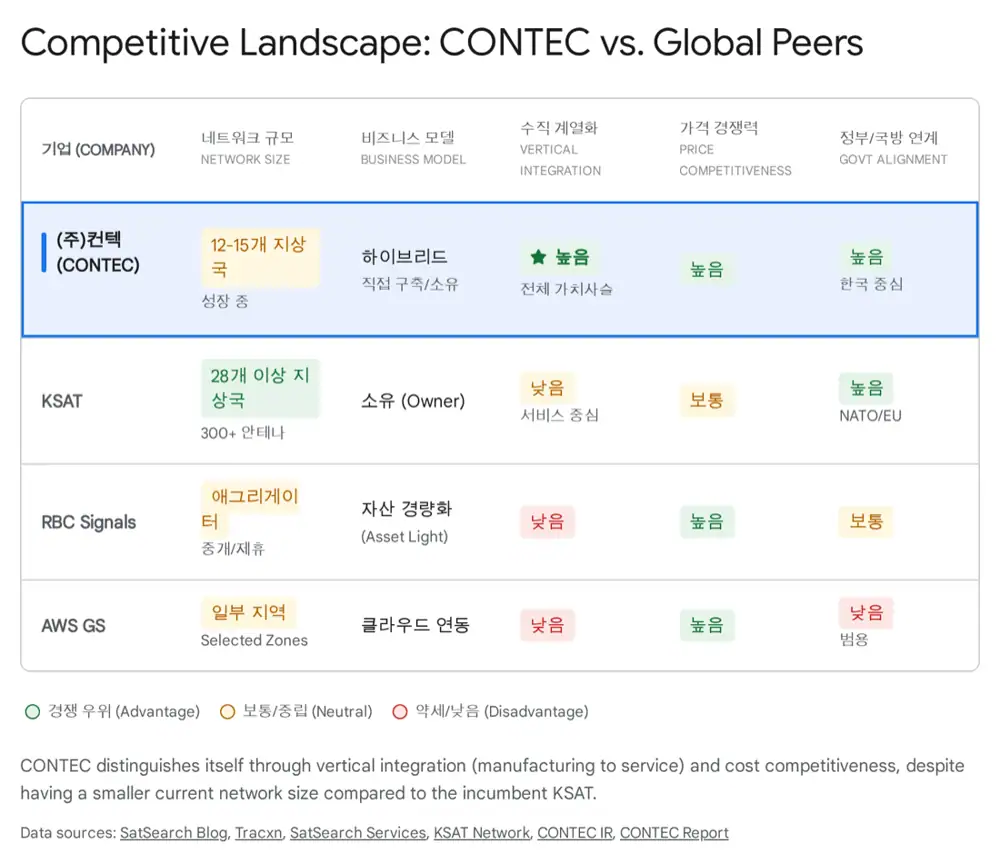
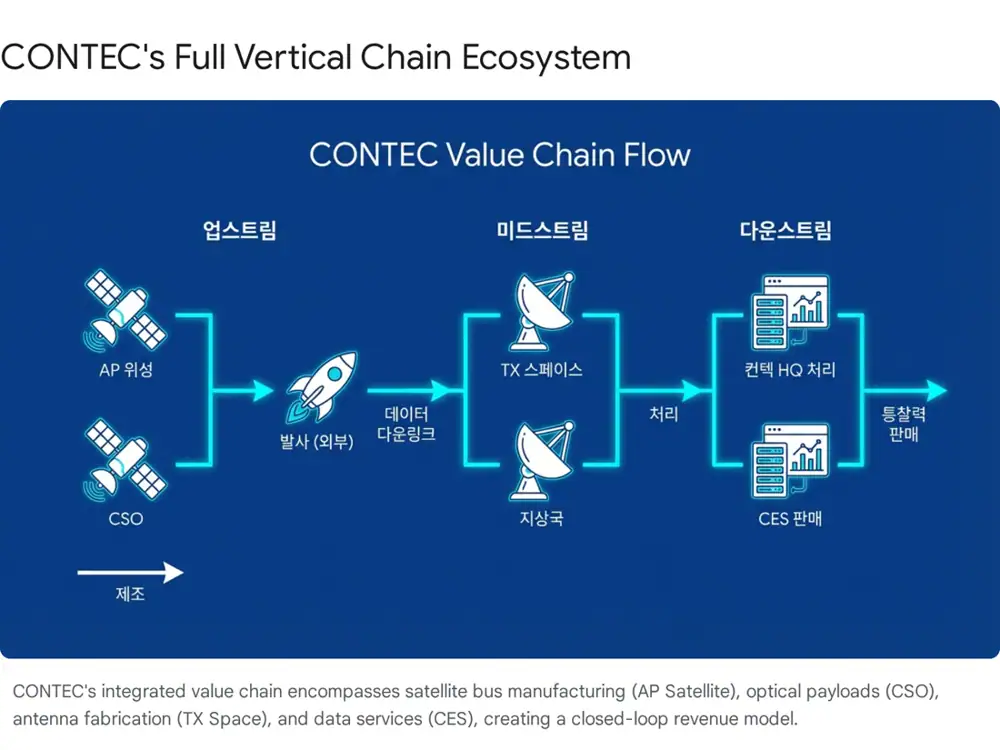
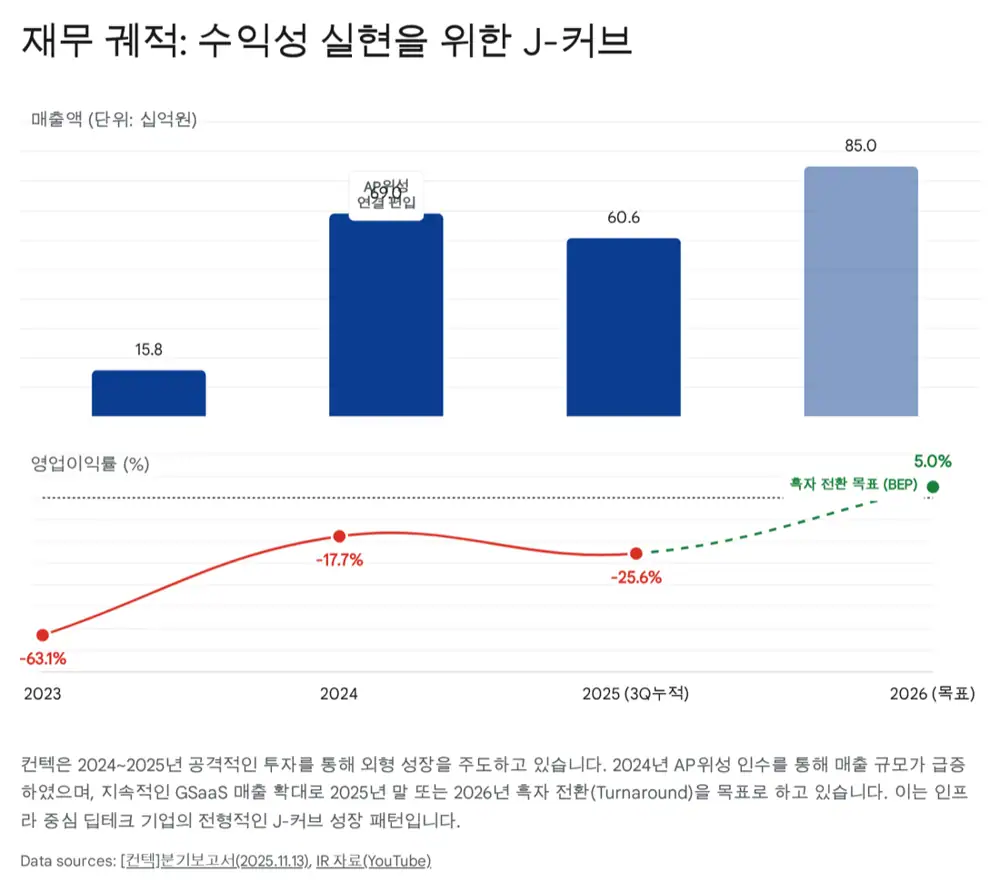
CONTEC’s key investment point is vertical integration across multiple mission steps excluding launch vehicles. The open question is whether current losses and CAPEX are temporary network buildout costs or structural cash burn.
Official fact: The source post says CEO Seong-hee Lee owns about 23.60%, spent 16 years at KARI, and is leading integration with acquired AP Satellite. It also lists Dong-chun Seo at 2.06%, Jae-won Lee at 0.49%, the employee stock ownership association at 1.09%, and Springspace Tech Investment Association No. 1 at 7.56%.
Interpretation: In satellite data, the moat is not a single antenna but the combination of network footprint, automation software, and processing speed. CONTEC is building that combination, while M&A execution and dilution remain key variables.
1. Value-chain structure
2. Technology and operating moat
Hyper-fast preprocessing
The source says geometric and radiometric correction is shortened from a 30~60 minute bottleneck to under 6 minutes, with a goal below 2 minutes.
One-click ground station operation
Software synchronizing frequency bands, orbital data, and antenna-control protocols is the operating core.
Laser communications shift
Safran and Cailabs OGS activity provides a long-term option on higher data capacity.
3. Customers, market, and roadmap
| Area | Source detail | What to watch |
|---|---|---|
| Customers | KARI, ADD, UAE satellite terminal contract, full vertical-chain proposal to Australia | Whether it shifts from government contractor to global partner |
| Market | US$1.8tn global space economy by 2035; downstream around 90% | Actual GSaaS utilization and recurring revenue matter more than TAM |
| Financials | About KRW 49.2bn cash, CB issuance, 15 ground stations | CAPEX efficiency and dilution risk together |
4. Risks
- Geopolitics and export controls: space data is tied to defense and national security.
- M&A integration: delayed AP Satellite PMI could extend interest and amortization burdens.
- Technological obsolescence: inter-satellite laser links could reduce demand for traditional ground-station networks.
- Cash burn: if the J-curve recovery is delayed, additional equity or mezzanine financing may be needed.
Sources
- 원문: https://m.blog.naver.com/PostView.naver?blogId=star_of_self&logNo=224117948972
- Simply Wall St ownership: https://simplywall.st/stocks/kr/capital-goods/kosdaq-a451760/conteccoltd-shares/ownership
- Safran OGS partnership: https://www.safran-group.com/news/contec-selects-safran-data-systems-expand-its-network-optical-ground-stations-2022-09-20
- Cailabs optical ground station: https://www.cailabs.com/news/aerospace-and-defense/contec-chooses-cailabs-for-its-next-optical-ground-station/
- IT Daily space economy: http://www.itdaily.kr/news/articleView.html?idxno=222289