DEEP RESEARCH · MEATBOX GLOBAL
Meatbox Global: Data-Driven Livestock Distribution and the 2026 Tariff Catalyst
A report connecting B2B meat trading, price data, fintech, cold chain, and U.S. beef tariff removal
0. Bottom line first
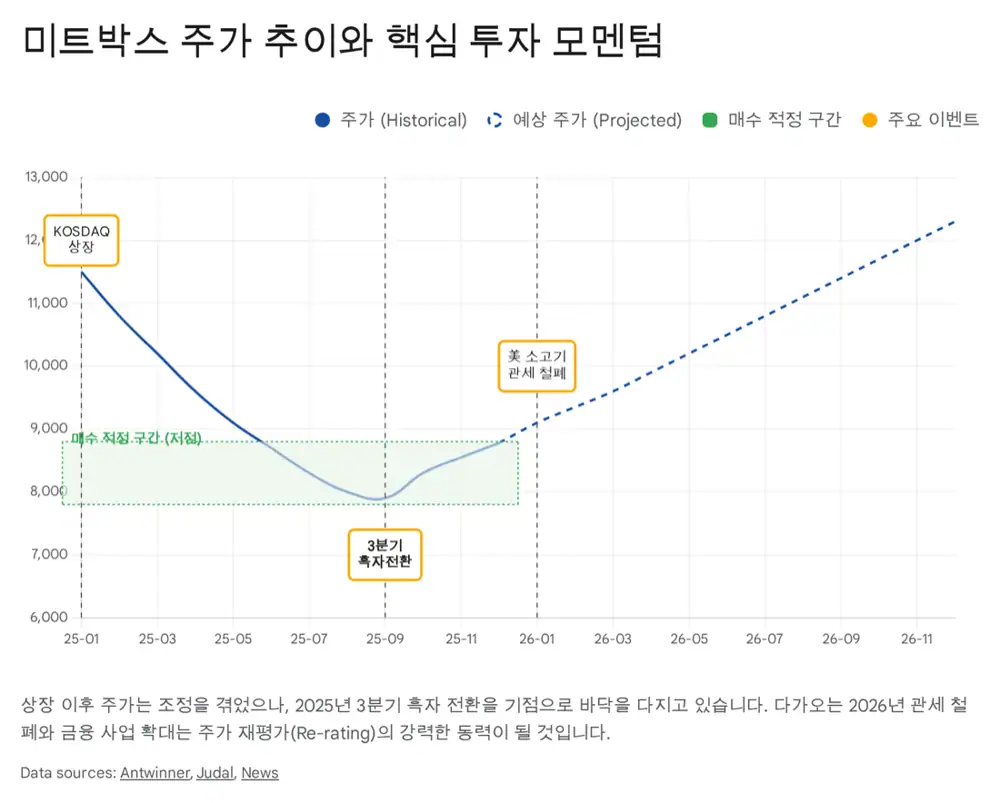
Meatbox is not simply an online meat shop. It is a vertical platform that combines price discovery, trading, logistics, and financing for livestock products. Q3 2025 profit turnaround and the 2026 U.S. beef tariff removal expectation are arriving together.
Official fact: The source describes Meatbox's platform commission as roughly 9.5% of GMV, compared with 30-40% margins in traditional offline distribution. It also states that traditional distribution costs can reach about 48% of total price.
1. Business model: from brokerage to total solution
Platform brokerage
About 9.5% of transaction value, including payment stability, logistics support, and marketing support.
Direct sales and PB
Global brands such as Cargill, IBP, and Swift, plus private brands such as Dangdanghandon and Dangdanghanwoo.
Logistics revenue
Frozen/chilled storage and fulfillment fees support other revenue.
Inventory-backed lending
Real-time market data is used to value inventory collateral and generate interest income.
2. Data moat
The source sees more than 10 years of livestock transaction data and real-time wholesale prices for more than 80,000 SKUs as Meatbox's core moat. Daily price-checking behavior by restaurants and butcher shops creates platform lock-in.
Official fact: The source says the disposal rate for directly purchased products is kept below 1% and mentions a nationwide cold-chain system through a partnership with Ottogi Logistics Service.
3. Industry catalyst: fragmented B2B food distribution and tariffs
Korea's B2B food distribution market is estimated at about KRW 55tn, but small wholesalers, phone orders, credit transactions, and opaque pricing remain common. Cost pressure on restaurants supports digital adoption.
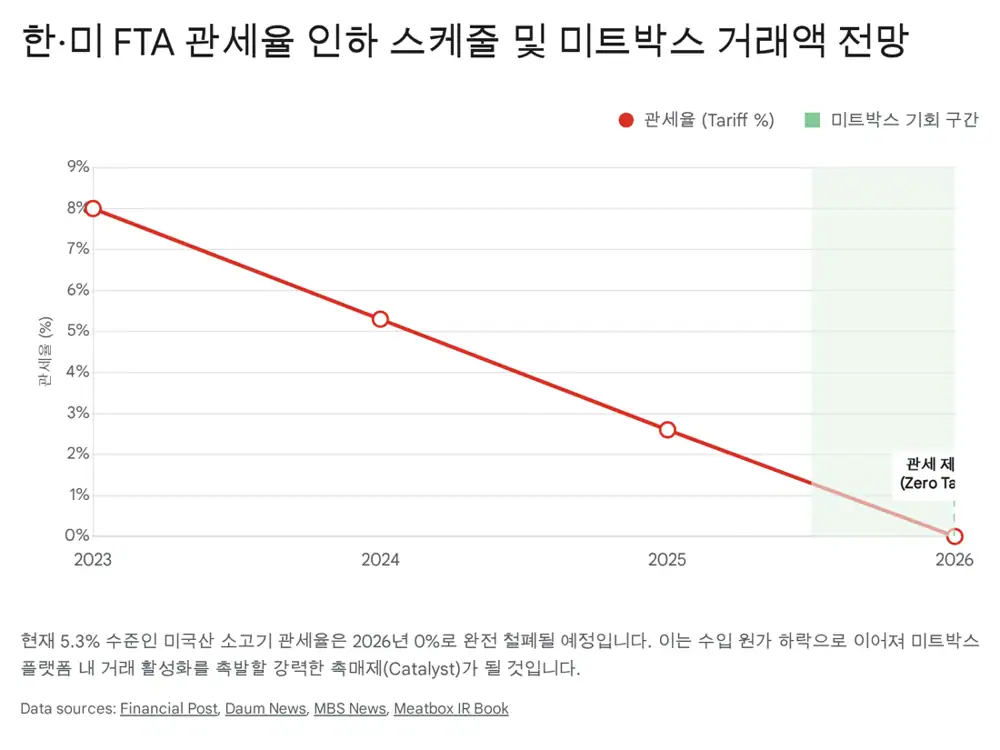
Interpretation: Full tariff removal on U.S. beef in 2026 could lift imported-beef transaction volume and platform GMV, but the pass-through to consumer prices and platform revenue still needs confirmation.
4. Financial and valuation view
| Item | Source figure/detail | Meaning |
|---|---|---|
| Q3 2025 | Operating profit turned positive at KRW 940mn | Turnaround checkpoint |
| IPO proceeds | About KRW 18.6bn | Stronger financial base |
| Debt ratio | About 102% as of Q3 2025 | Expansion-capacity indicator |
| Liquidity | Cash-like assets and short-term financial products about KRW 20.8bn | Buffer in a high-rate environment |
| Expected revenue | 2025 expected revenue KRW 174.9bn | Basis for PSR undervaluation argument |
| GMV | Annual GMV around KRW 500bn | Benchmark for platform multiples |
5. Risks and checkpoints
- Potential post-listing overhang from VC and other financial investors.
- MeatMatch lending delinquency rate and collateral liquidation system.
- Whether the barriers from B2B meat-market practices, cold chain, and credit culture remain strong against large commerce players.
- Whether the 2026 tariff effect can make KRW 1tn GMV visible.
Sources
- 네이버블로그 원문: https://m.blog.naver.com/PostView.naver?blogId=star_of_self&logNo=224111876782
- ZUM 뉴스: https://m.news.zum.com/articles/102208495/%EB%AF%B8%ED%8A%B8%EB%B0%95%EC%8A%A4%EA%B8%80%EB%A1%9C%EB%B2%8C-3%EB%B6%84%EA%B8%B0-%EC%98%81%EC%97%85%EC%9D%B4%EC%9D%B5-9-4%EC%96%B5%EC%9B%90-%ED%9D%91%EC%9E%90%EC%A0%84%ED%99%98
- YouTube: https://www.youtube.com/watch?v=_4Jg3tmw5FM
- 라이브뉴스: http://www.livesnews.com/news/article.html?no=52479
- 마켓인: https://marketin.edaily.co.kr/News/ReadE?newsId=02338646642297168
- 신아일보: http://www.shinailbo.co.kr/news/articleView.html?idxno=2146378
- ROA 리서치 PDF: https://static.roa.ai/research/company/20251124_company_710841000.pdf
- KSD 증권정보포털: https://m.seibro.or.kr/cnts/company/selectRelease.do%3Bjsessionid=zKyNcbjby01PpQmKrG1bSnNrkG73kBDl0JcTXDnmg1SxLPB5jQXG!434143458