DEEP RESEARCH · Semiconductor cycle
[Semis] The Chart Everyone Loves — But Something Nags Me
Short note after looking at the DRAM-price chart: can customers actually pay this?
0. Bottom line first
The DRAM-price chart looks great — but the real question is whether end customers (especially mainstream consumers) can afford this price. To stretch the cycle further, CapEx beyond expectations is needed; and with prices already this high, IDMs will need extra fuel to break the current trading range. That's why I'd rather position in foundry / design houses than in memory itself.
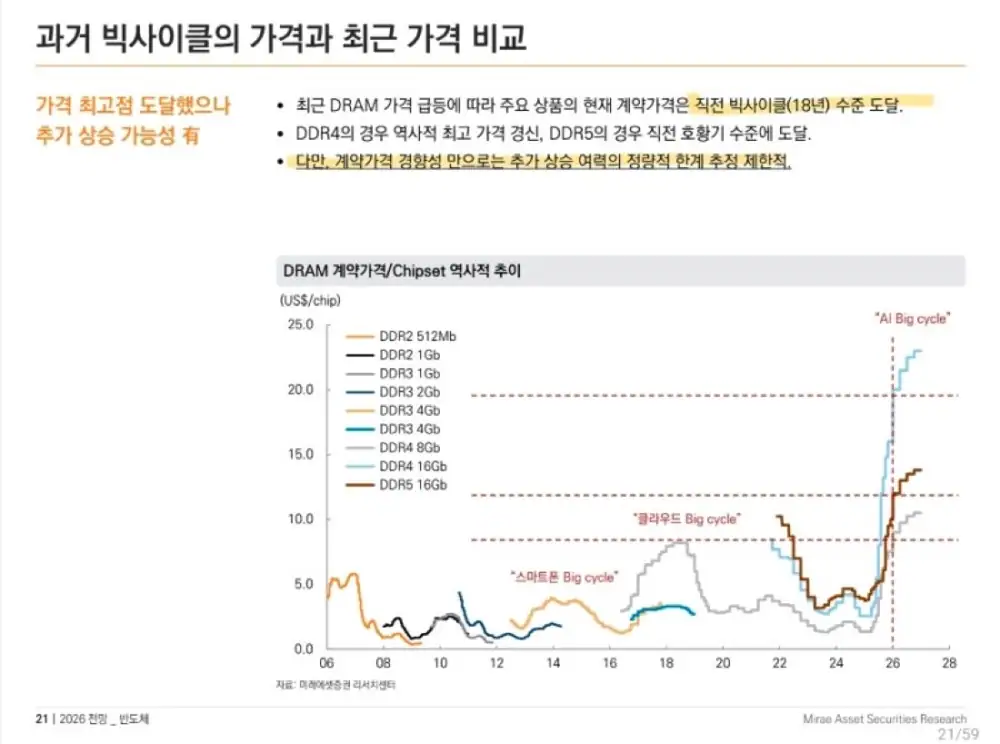
Below is the chart everyone is "loving" right now.
1. The more bullish the chart looks, the bigger the question
Official fact: The chart referenced shows a steep rise in DRAM prices. Consensus reads "cycle boom."
Interpretation: Fine — AI servers can absorb the price. But can mainstream consumer devices? My gut says prices have risen as much as they realistically can. Sure, it's possible we enter a new normal where devices ship with less DRAM and launch new products that way — but will customers actually buy them?
2. What would extend the cycle? — The CapEx variable
CapEx beyond expectations
For the cycle to run longer, IDM CapEx must overshoot. Breaking out of the range likely requires CapEx in this cycle too.
Past-cycle trap
Historically, large CapEx was a top signal. Will it differ this time? It worries me that prices have already moved so far.
My positioning
So I lean toward foundry / design houses rather than memory pure-plays. I'll invest when CapEx materially appears. For memory, I'll consider buying only after a confirmed break of prior highs.
3. A note on the mood
Interpretation: Honestly, too many people are bullish. I can barely find a bear — though it's possible the bears just aren't speaking up. When consensus tilts hard one way, sketching out the opposite scenario is the safer move. That's the point of this short memo.
Sources
- Original post (Naver Blog): https://m.blog.naver.com/PostView.naver?blogId=star_of_self&logNo=224110771363