DEEP RESEARCH · INBODY/INTANGIBLE ASSETS
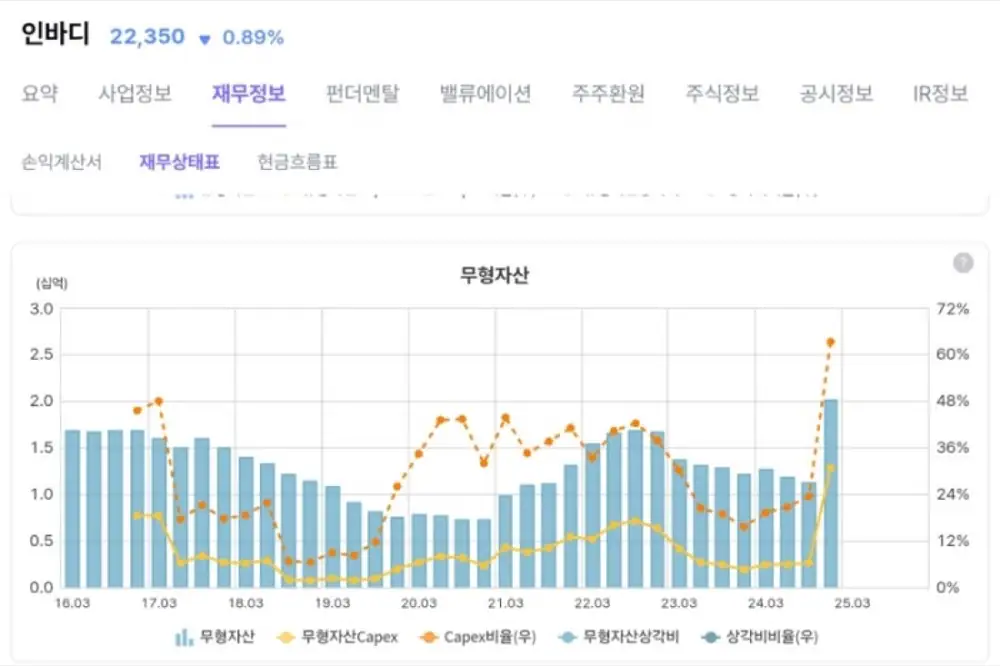
[InBody] Increase in Intangible Assets in the 2024 Q4 Business Report
A review of what appears to be InBody’s first meaningful capitalization of internally developed intangible assets in 2024
0. Bottom line first
InBody has generally had little history of recognizing R&D costs as intangible assets, mainly recognizing items such as purchased software. In 2024, however, internally developed intangible assets classified as development costs appear to have been recognized. My first guess is that this may relate to LB Trainer.
1. Accounting rule: research versus development
Official fact: InBody accounts for intangible assets and R&D costs under Korean IFRS. Research-stage spending is expensed immediately, while development-stage spending is recognized as an intangible asset, or development cost, only when strict conditions are met.
| Capitalization condition | Meaning |
|---|---|
| Probable future economic benefit | The developed product or technology is expected to generate future revenue. |
| Reliable cost measurement | The costs invested in development can be clearly measured. |
| Technical feasibility | There is sufficient evidence that the project can be completed for use or sale. |
| Management intent and resources | Management intends and is able to complete, use, or sell the asset. |
| Identifiable intangible asset | The project is specifically identifiable and distinguishable from other assets. |
2. What changed in 2024
Interpretation: The 2024 increase in intangible assets appears mainly attributable to internally developed intangible assets classified as development costs. InBody had historically expensed all R&D costs rather than capitalizing them as intangible assets.
Official fact: Based on the source note, from 2019 to 2023 InBody expensed all R&D spending, including about KRW 9.3 billion in 2023, and had no development costs recognized as intangible assets. In 2024, development-cost recognition as intangible assets appears to have occurred for the first time.
3. Development costs and other intangibles in numbers
| Item | Source figure/comment | Read |
|---|---|---|
| Total intangible-asset increase | About KRW 800 million | Mostly explained by new development-cost recognition |
| Capitalized development cost in cash flow statement | Around KRW 1.3 billion | Amount invested in development activity and capitalized in 2024 |
| Development-cost carrying amount at 2024 year-end | About KRW 800-900 million | May imply some amortization or impairment during the year |
| Other intangible assets | About KRW 1.2 billion at end-2023 | Mainly purchased software and industrial property rights |
| Software and related items in separate statements | KRW 900 million in 2023 → KRW 800 million in 2024 | Looks like normal amortization, not the source of the increase |
Interpretation: The roughly KRW 1.3 billion in capitalized development costs was recognized as an asset rather than a current-period expense, so it likely reduced 2024 expenses and supported operating profit by that amount directionally.
4. Possible cause of the increase
Capitalizing development costs means recording identifiable spending from product or technology development as an intangible asset when future economic benefit is expected.
Interpretation: In 2024, InBody appears to have recognized some development costs as intangible assets after proving technical feasibility and commercial viability for major development projects. This may have coincided with a new product launch or completion of a software/service platform.
LB Trainer
My first thought is that the cost may relate to LB Trainer.
New products/solutions
Body-composition analyzer new models and healthcare big-data solutions may have reached completion or commercialization-readiness stages.
Software
For software, there may be a path to profit without heavy SG&A.
Based on the intangible-asset note, the acquisition cost of development-cost intangible assets was the newly recognized 2024 amount of about KRW 1.3 billion, while the year-end 2024 carrying amount was about KRW 800-900 million. The difference may suggest some amortization started during the year or impairment was recognized, but most of the newly recognized amount remains on the books.
Sources
- Original post: Naver Blog original