DEEP RESEARCH · U.S. INFRASTRUCTURE/TELECOM EQUIPMENT·POWER·GAS
Thoughts on U.S. Treasuries and Infrastructure Investment Trends
An investment memo linking U.S. government-spending expectations, Treasury maturity timing, and BEAD, grid, and gas-infrastructure beneficiaries
0. Bottom line first
Telecom equipment, power infrastructure, and gas-related sectors moved on expectations for U.S. infrastructure investment, but they now look to be pausing because U.S. Treasuries have stabilized and concerns about lower government spending have grown. I think first-half policy momentum may weaken, while the area around April could be a preparation window for a possible second-half infrastructure reacceleration.
Personally, I think HFR may be the most sensitive beneficiary because the telecom-equipment sector depends most directly on BEAD execution. Power infrastructure and gas names also have private-sector and overseas-capital momentum, but telecom equipment is more exposed to whether BEAD happens or not.
1. Three beneficiary sectors
| Sector | Source view | Key variable |
|---|---|---|
| Telecom equipment | U.S. BEAD expectations. The policy was pushed under Biden and has paused for now, but the source thinks it is ultimately needed for manufacturing rebuilding | BEAD execution pace, fiber-optic and 5G equipment orders |
| Power infrastructure | U.S. power infrastructure investment, with both government policy and private investment sentiment involved | Grid modernization and electricity demand from data centers, EVs, and AI servers |
| Gas-related investment | The U.S. appears to be trying to use Korea and Japan in the investment structure, so the sector may be less dependent on direct U.S. government investment | LNG terminals, pipelines, and Alaska LNG |
Telecom equipment
The source says the BEAD program is a roughly USD 42.45 billion, or about KRW 61 trillion, project to build broadband networks across the U.S. by 2030.
Power grid
The source says the U.S. infrastructure law allocates more than USD 65 billion to grid modernization and clean energy.
Gas infrastructure
The Alaska LNG pipeline is described as a large project moving northern Alaska natural gas 1,300km to the southern coast.
2. Why the theme is pausing now
Official fact: The source says these sectors rose on expectations for U.S. infrastructure growth, but recently paused somewhat as U.S. Treasuries stabilized.
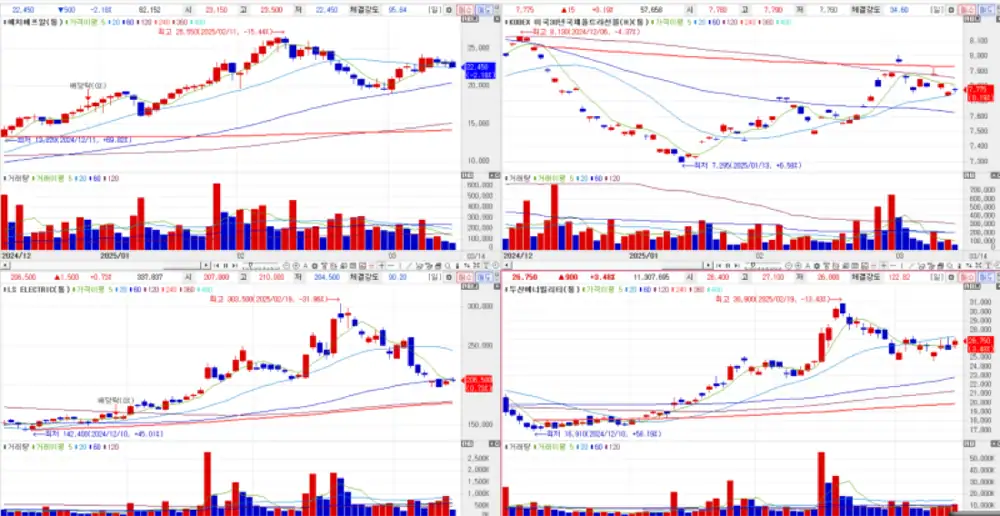
Interpretation: Stabilizing Treasuries are positive in the sense that rate-spike fears ease, but if the market reads it as “the U.S. government will spend less,” it becomes a short-term headwind for infrastructure themes. The source thinks this concern about reduced spending could continue through April.
The source also argues that many U.S. Treasuries mature by May, so the U.S. government may avoid talking too aggressively about large infrastructure investment. Announcing major additional spending while large maturities and refinancing overlap could unsettle the bond market.
3. BEAD and telecom equipment
The core of the telecom-equipment thesis is the Broadband Equity, Access, and Deployment program, or BEAD. The source describes it as a project investing about USD 42.45 billion, or about KRW 61 trillion, by 2030 to build broadband networks across the United States.
- Large investment plans by AT&T, Verizon, Comcast, and cable operators increased expectations for telecom infrastructure buildout.
- Fiber-optic cable, 5G equipment, and other telecom-equipment names reacted to those expectations.
- Some Korean optical-telecom equipment companies were discussed as possible beneficiaries of U.S. infrastructure projects.
- I think HFR may have the greatest sensitivity in this area because its exposure to BEAD execution is high.
4. Power and gas infrastructure
For power infrastructure, the key is grid modernization and clean-energy spending under the U.S. infrastructure law. The source says more than USD 65 billion has been allocated, driving the largest grid upgrade push. It mentions replacement of aging transmission lines, new transmission for renewable expansion, and grid investment to connect battery storage facilities.
Private investment also matters. Data-center growth, EV adoption, and AI server demand are increasing electricity demand, so utilities and private investors are putting capital into transmission, distribution, and the grid. The source says power equipment, transmission-line, and nuclear-related stocks strengthened in this flow.
Gas infrastructure centers on LNG terminals and pipelines. The source highlights the Alaska LNG pipeline project as an infrastructure plan to move northern Alaska natural gas through a 1,300km pipeline to the southern coast and process it into LNG. It sees investor interest rising because participation by Korean and Japanese companies, including KOGAS, has been discussed.
5. Second-half outlook and portfolio view
The big assumption in this post is that even if first-half policy momentum weakens, infrastructure execution can resume in the second half because manufacturing rebuilding requires it.
If the U.S. government is targeting manufacturing rebuilding, the enabling infrastructure is essential. The source expects investment execution to increase after Treasury maturity issues pass and budget discussions become more visible, spanning traditional infrastructure such as roads and bridges and future infrastructure such as EV chargers, smart grids, and factory-site preparation.
| Holding/watch item | Place in the source | Investment logic |
|---|---|---|
| Doosan Enerbility | Held as a gas-power-related name and described as the long-term top pick | Expected beneficiary of power and gas-generation infrastructure investment |
| ACE Nuclear Deep Search / Nuclear Theme Deep Search ETF | Used at high weight in retirement and personal-pension accounts | Diversified exposure to the re-rating of nuclear power as clean-energy infrastructure |
| HFR | Held at small weight, with a plan to raise exposure toward the second half | A telecom-equipment name that may be highly sensitive to BEAD and optical-telecom execution |
| SK Eternix(?) | Mentioned in the detailed section as a partial holding/watch item | A renewable-energy and infrastructure-linked watch item |
Interpretation: I think power and gas have private demand and energy-security momentum even without direct government spending. By contrast, telecom-equipment names such as HFR may have more leverage once BEAD execution becomes visible, so I would adjust exposure while watching second-half orders and policy news flow.
6. Checklist
- Whether BEAD execution is delayed or accelerates again in the second half
- Whether U.S. Treasury maturity and refinancing pressure eases after May
- Whether grid modernization, data-center electricity demand, and nuclear news translate into power-infrastructure earnings
- Whether Alaska LNG and Korea/Japan capital participation discussions turn into real contracts
- Whether HFR gains visibility in U.S. optical-telecom orders or earnings
Sources
- Original Naver Blog post: https://m.blog.naver.com/PostView.naver?blogId=star_of_self&logNo=223796846042