DEEP RESEARCH · TIGER US PHLX AI SEMICONDUCTOR NASDAQ
Why I Chose TIGER US PHLX AI Semiconductor Nasdaq in a retirement pension account
A long-term comparison of TIGER's AI semiconductor ETF with SOXX and SMH.
0. Bottom line first
The DC pension contribution came in yesterday, so I invested the full amount. I had originally planned to buy long-duration U.S. bonds, but the correction arrived faster than expected. I bought TIGER US PHLX AI Semiconductor Nasdaq at a 70% weight and used the remaining 30% for a Nasdaq 100 bond-mixed product. I think the holdings are suitable for a long-term position, so I will watch them.
Official fact: The source links a prior retirement-pension post: retirement-pension contribution timing note.

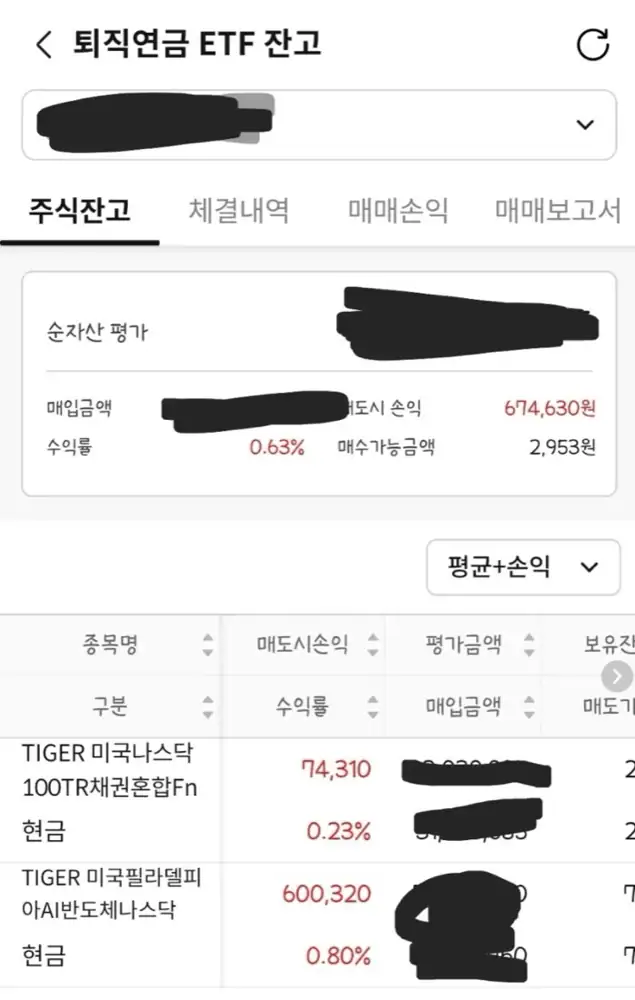
My judgment is straightforward. If I can take a long view on the AI semiconductor cycle and tolerate volatility, TIGER US PHLX AI Semiconductor Nasdaq is a high-purity AI semiconductor vehicle that is easy to access in a Korean pension account. The tradeoff is higher concentration and a higher fee than SOXX or SMH.
1. Basic ETF profile
Official fact: TIGER US PHLX AI Semiconductor Nasdaq ETF, ticker code 497570, tracks Nasdaq's PHLX US AI Semiconductor Index, or ASOX.
ASOX focuses on the AI semiconductor value chain: fabless companies, equipment, sub-7nm foundries, EDA/IP, and other semiconductor companies with high AI relevance. It is described as a legacy-free portfolio because it excludes traditional analog semiconductor names and IDM exposure such as Intel.
2. TIGER, SOXX, and SMH portfolio comparison
| ETF | Number/style | Top-weight profile |
|---|---|---|
| TIGER AI Semiconductor | About 18 holdings, most compressed | NVIDIA around 19-23%, TSMC around 15-18%, Broadcom around 15-20% |
| SOXX | About 30 holdings, broad semiconductor exposure | Broadcom around 10.4%, NVIDIA 7.5%, Qualcomm 6.4%, TI 6.2%, AMD 6.1% |
| SMH | About 25 holdings, large-cap concentrated | NVIDIA around 19%, TSMC 12%, Broadcom 9%, ASML 5%; top 10 around 72% |
Interpretation: TIGER is concentrated AI exposure, SOXX is a balanced semiconductor basket, and SMH is a large-cap semiconductor portfolio with high NVIDIA and TSMC exposure.
3. Fees, past performance, and volatility
Costs compound over time. In the source, TIGER's total fee is 0.49% per year, including a 0.449% management fee. SOXX and SMH are both around 0.35% per year. On fees alone, SOXX and SMH are cheaper.
Official fact: The source cites 2019-2024 five-year total returns of about +263% for SMH and +181% for SOXX. It also cites Trackinsight five-year volatility of about 35.9% for SMH and 37.9% for SOXX.
TIGER itself was listed in late 2024, so it does not have a five-year ETF track record. The source infers that ASOX might have approached or exceeded SMH historically because of its higher AI-leader exposure, while also carrying greater downside volatility in weak markets.
0.49% vs 0.35%
TIGER charges more than SOXX and SMH in exchange for local accessibility.
AI large-cap sensitivity
SMH outperformed SOXX over the cited five-year period largely because of NVIDIA and similar AI leaders.
Concentration
TIGER combines higher potential upside with higher portfolio concentration.
4. Growth, not dividends
All three ETFs are low-dividend products. The source cites SOXX at about 0.6-0.7% on a 12-month basis and SMH in roughly the 0.4% range. TIGER has too little history for a stable official dividend-yield record. NVIDIA and AMD pay little or no dividend, while TSMC and Broadcom may contribute, so the overall product is still growth-oriented.
5. Long-term fit
The AI semiconductor market can expand through data-center GPUs, edge devices, autonomous driving, and IoT. The source cites a forecast for the global AI chipset market to grow at a 28.9% CAGR from 2024 to 2030. If that assumption is right, TIGER is the most direct of the three vehicles.
When TIGER fits
- I have high conviction in the AI semiconductor theme.
- I can tolerate concentration and volatility.
- I want easy won-denominated access inside a Korean pension account.
When SOXX or SMH fits
- I prefer a longer track record and lower fees.
- I want exposure to the broader semiconductor industry, not only AI.
- I prefer established global ETFs over a narrower theme product.
In the end, the better ETF depends on the investor's risk-return profile. I allocated 70% to TIGER in the retirement pension account and used the remaining 30% for a Nasdaq 100 bond-mixed product. I need to keep watching AI semiconductor demand, NVIDIA/Broadcom/TSMC earnings, fee-adjusted performance, and drawdowns during corrections.