DEEP RESEARCH · TRADE POLICY
How Korea's Crackdown on China Rerouting Could Pressure Supply Chains
A review of how tighter foreign-investment screening could affect China's investment strategy, export structure, and the U.S.-China conflict.
0. Bottom line first
If Korea narrows the route for Chinese rerouted exports, China will likely respond with more diversified overseas investment, more exports to emerging markets, and stronger domestic-demand policies. The cost and regulatory risk of rerouting, however, should rise.
Official fact: The source cites a Dong-A Ilbo article: exclusive report on Korea moving to revise laws against China rerouting exports. The article discusses rising Chinese rerouting investment into Korea and stronger foreign-investment review.
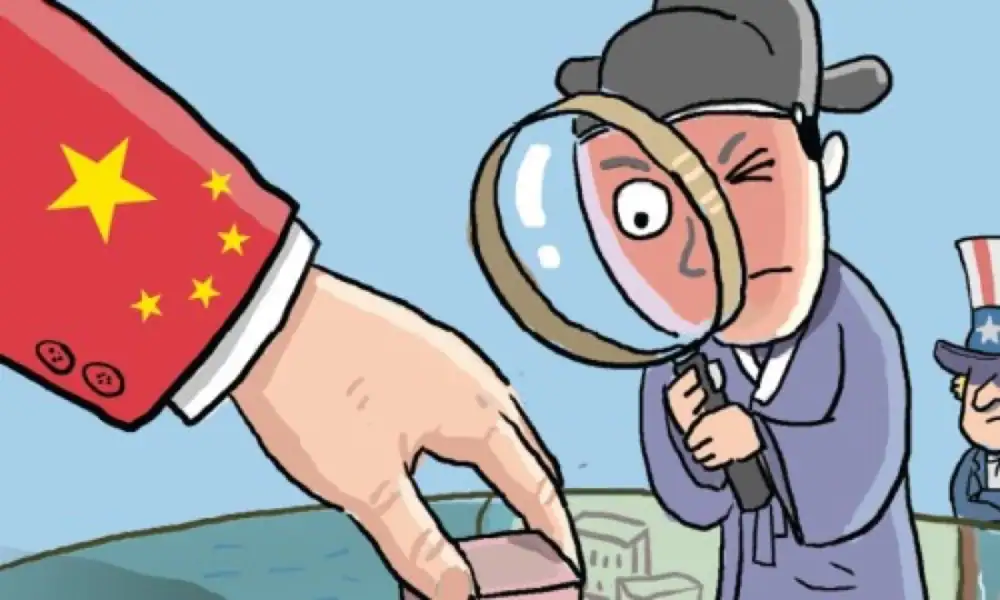
1. Changes in Chinese overseas investment
Chinese companies have used third-country production bases to avoid U.S. tariffs and sanctions. The source says Chinese investment into Korea rose about fourfold in 2023 from 2022 to KRW 8.3 trillion, a record high, with batteries and solar manufacturing among the key areas.
Alternative production base
Vietnam and Malaysia may attract more investment, but local scrutiny is also rising.
Local production
Some countries, including Hungary and Poland, have welcomed Chinese EV and battery plants.
Mexico route
USMCA access is attractive, but U.S., Mexican, and Canadian scrutiny remains a constraint.
2. China's export structure
As U.S.-China tensions reduce Chinese exports to the U.S., exports to emerging markets such as ASEAN have grown. The source says China's exports to ASEAN rose 12% year over year in 2023, making ASEAN China's largest export market ahead of the U.S. and EU.
Russia and non-sanctioning countries have also become alternative markets. The source states that China-Russia trade reached USD 240.1 billion in 2023, a record, while Chinese exports to Russia jumped 46.9% in one year.
| Route | Chinese response | Limit |
|---|---|---|
| ASEAN | More components, assembly, and re-export flows | Local deficits and pushback against Chinese imports |
| Russia, Middle East, LatAm, Africa | Use sanction gaps and Belt and Road ties | Cannot quickly replace developed-market demand |
| Domestic market | Dual circulation, consumption, technology self-reliance | May not fully absorb export-sector shocks |
3. Extension of the U.S.-China trade war
Korea's move can be interpreted as aligned with broader U.S. pressure on China. The source frames U.S. tariffs, export controls, investment restrictions, and allied cooperation as part of a wider supply-chain contest.
4. Possible Chinese government response
- Diplomatic objections and calls for fair, non-discriminatory investment treatment.
- Potential non-tariff pressure such as customs, quarantine, or consumer sentiment measures.
- Use of RCEP, ASEAN-China FTA channels, and Belt and Road trade agreements.
- More domestic stimulus, subsidies, and localization to reduce export dependence.
5. Impact on Chinese industry and macro conditions
The source highlights risks to sectors active in Korea-related investment, including semiconductors, batteries, and solar. It also notes that China's 2023 exports fell 4.6% year over year, the first annual decline in seven years.
Overcapacity could worsen in steel, solar, batteries, and semiconductor equipment. On employment, the source cites China's 16-24 youth unemployment rate reaching 21.3% in June 2023.
Interpretation: This is both a short-term shock and a long-term structural pressure. China's large domestic market and manufacturing ecosystem may absorb part of the impact, but the economics of rerouted exports are likely to deteriorate.
Sources
- Source 1: https://v.daum.net/v/20250227030546303
- Source 2: https://v.daum.net/v/20250227030546303