DEEP RESEARCH · KAKAO PAY/FINTECH
[Kakao Pay] First Profit Turnaround Since Listing and Business Analysis
An investment log reviewing post-listing institutional flow, the 2025 profit-turnaround case, and the securities, insurance, and AI-based financial-platform strategy
0. Bottom line first
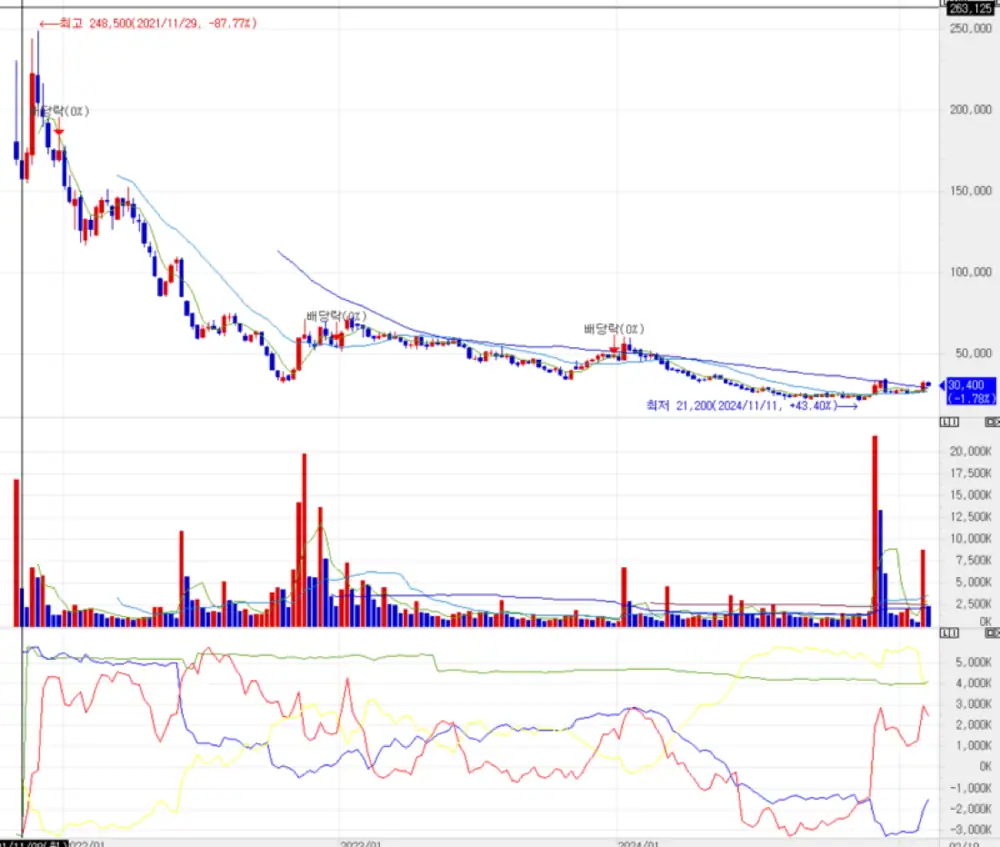
The weekly chart showed a major change in institutional flow, possibly the largest since listing, and the author bought after investigating the company. The core investment point is a potential full-year profit turnaround in 2025. The 2024 loss appears distorted by TMON/WeMakePrice-related costs; on an adjusted basis, the company looks close to breakeven already.
1. Why look at Kakao Pay now
Interpretation: The author noticed a sharp change in institutional buying on the weekly chart late last year. The source says it looked like the largest flow since listing and may have involved the National Pension Service.
That led the author to move beyond a chart note and review Kakao Pay’s business structure, earnings position, and future direction. The main investment point is “profit turnaround this year”; excluding TMON/WeMakePrice costs, the author sees the company as effectively already turned.
2. Business structure versus traditional financial groups
Official fact: The source explains that Korean financial holding companies have built comprehensive financial structures around banks while also owning insurers and securities firms. It cites KB Financial, Shinhan Financial, Hana Financial, NH NongHyup Financial, Woori Financial, and Samsung, Hanwha, Mirae Asset, Meritz, Kyobo, and DB financial groups. It also cites reporting that Woori Financial decided in 2024 to acquire Tongyang Life and ABL Life to strengthen its insurance lineup: Korea Economic Daily article.
Bank, securities, insurance
Financial groups diversify bank-based earnings by adding securities and insurance.
Finance from the platform
Kakao Pay and Toss expand everyday-finance platforms through securities and insurance subsidiaries.
From payments to full finance
The direction links payments, transfers, securities, insurance, loan brokerage, and AI financial assistance.
Interpretation: Traditional finance builds comprehensive finance through branches and licenses; Kakao Pay expands products from a KakaoTalk-based user touchpoint. The source frames this as a difference in everyday service depth and user-centered execution.
3. Kakao Pay and Toss: similar everyday finance, different expansion paths
Official fact: The source says both Kakao Pay and Toss established securities and insurance subsidiaries as a foundation for platform expansion: Korea Financial News article.
- Kakao Pay began as Korea’s first simple-payment service in 2014 and became an independent corporation in 2017.
- Kakao Pay entered securities by acquiring Baro Investment & Securities in 2018 and has also expanded insurance services.
- Toss expanded across finance through Toss Securities, Toss Bank, and insurance-agency operations.
- The source says traditional financial institutions are pursuing digital transformation, but still lag Kakao Pay and Toss in user base and everyday service integration.
4. Earnings: revenue growth, but consolidated profit is only now turning
Official fact: The source states that Kakao Pay’s consolidated revenue rose from KRW 458.6bn in 2021 to KRW 521.4bn in 2022 and KRW 615.4bn in 2023, implying roughly 15-20% annual growth. Operating profit remained negative: KRW -27.2bn in 2021, KRW -45.5bn in 2022, and KRW -56.6bn in 2023; the 2023 operating loss increased 24.3% YoY. The financial data source is FnGuide financial statements.
| Item | Key source figure | Meaning |
|---|---|---|
| Revenue growth | 2021 KRW 458.6bn → 2022 KRW 521.4bn → 2023 KRW 615.4bn | Platform revenue kept growing |
| Operating profit | 2021 KRW -27.2bn, 2022 KRW -45.5bn, 2023 KRW -56.6bn | Subsidiary investment and new-business costs kept consolidated profit negative |
| 2024 | Revenue KRW 766.2bn, operating loss KRW 57.5bn | Revenue rose 25% YoY while losses began improving |
| 4Q24 | Separate operating profit KRW 2.3bn, first quarterly profit | Signal of improving cost/profit structure |
Official fact: 2023 TPV was KRW 140.9tn, up 19.7% YoY, and revenue-contributing transaction volume was KRW 40.7tn, up 20.4%. Financial-service transaction volume rose 76% YoY.
Official fact: 2024 financial-services revenue reached a record KRW 84.0bn and represented about 38% of total revenue. Kakao Pay Insurance revenue was KRW 38.6bn in 2024, up fivefold YoY.
5. Profit-turnaround logic: excluding TMON/WeMakePrice costs, breakeven is near
Official fact: The source says that excluding the KRW 31.5bn one-off loss related to TMON/WeMakePrice settlement issues, Kakao Pay was already close to breakeven in 2024. It cites an adjusted 2024 net profit of KRW +15.9bn: Women Economy article.
Interpretation: The author’s core scenario is a 2025 consolidated net-profit turnaround. The source also cites securities-market commentary that 4Q24 adjusted operating loss was only KRW 1.8bn, effectively breakeven, and that profitability could turn positive from 2025: Weekly Donga article.
6. AI and financial-service expansion
Official fact: The source says Kakao Pay is applying AI to financial services. Personalized recommendation AI, a financial assistant, and AI credit scoring are described as tools that can improve user satisfaction and operating efficiency, with a related article cited here: Digital Daily AI article.
- The AI financial assistant is framed as a way to analyze user financial data and connect users to relevant products and services.
- Recommendation AI personalizes the rationale behind card, insurance, and financial-product suggestions.
- AI credit scoring and alternative credit models are treated as technologies that can improve financial access and risk management.
- In insurance and securities, AI can support underwriting, consultation, investment-information discovery, and risk-management automation.
7. Investment thesis through 2028
Interpretation: The source argues that Kakao Pay can remain a representative fintech growth stock through 2028, supported by more than 20 million MAUs linked to KakaoTalk, payments-to-finance expansion, improving securities and insurance subsidiaries, and AI capability.
- The source suggests the revenue mix between payments and financial services could approach 5:5 by 2028.
- It expects profit growth to outpace revenue growth as securities turns profitable and insurance scales.
- The scenario assumes double-digit revenue growth over the next five years and roughly 15-20% average annual growth, allowing 2028 revenue to potentially more than double from the current level.
- It also includes a possible mid-to-high single-digit operating margin.
- Risks to keep checking include competition from Naver Pay and Toss, stronger platforms from traditional financial institutions, and platform-monopoly regulation: Shin Donga article on pay competition.
My conclusion is that Kakao Pay should be viewed not merely as a payments name, but as a company moving from payments to finance and then to an AI-based comprehensive financial platform. Numerically, the key is 2025 profitability; structurally, the key is operating leverage from securities, insurance, and AI.
Sources
- Original Naver Blog post: https://m.blog.naver.com/PostView.naver?blogId=star_of_self&logNo=223761396159
- Source link 1: https://www.hankyung.com/article/2024062637431#:~:text=%EC%9A%B0%EB%A6%AC%EA%B8%88%EC%9C%B5%EC%9D%80%205%EB%8C%80%20%EB%8C%80%ED%98%95%20%EA%B8%88%EC%9C%B5%EC%82%AC%20%EC%A4%91,%EC%9B%83%EB%8F%8C%20%EC%A0%95%EB%8F%84%EB%A1%9C%20%EC%9D%80%ED%96%89%20%EC%9D%98%EC%A1%B4%EB%8F%84%EA%B0%80%20%EB%86%92%EC%95%98%EB%8B%A4
- Source link 2: https://www.hankyung.com/article/2024062637431#:~:text=%EB%8F%99%EC%96%91%EC%83%9D%EB%AA%85%EA%B3%BC%20ABL%EC%83%9D%EB%AA%85%EC%9D%80%20%EC%98%A4%EB%8A%94%208%EC%9B%94%20%EC%B6%9C%EB%B2%94,%EC%9E%90%EC%82%B0%20%EC%9A%B4%EC%9A%A9%20%EB%8A%A5%EB%A0%A5%EC%9D%84%20%EA%B7%B9%EB%8C%80%ED%99%94%ED%95%98%EA%B2%A0%EB%8B%A4%EB%8A%94%20%EA%B3%84%ED%9A%8D%EC%9D%B4%EB%8B%A4
- Source link 3: https://www.hankyung.com/article/2024062637431#:~:text=%EB%8F%99%EC%96%91%EC%83%9D%EB%AA%85%EA%B3%BC%20ABL%EC%83%9D%EB%AA%85%EC%9D%84%20%ED%95%9C%20%EB%B2%88%EC%97%90%20%EC%9D%B8%EC%88%98%ED%95%98%EB%A9%B4%EC%84%9C,%EC%8B%A0%ED%95%9C%EB%9D%BC%EC%9D%B4%ED%94%84%EC%83%9D%EB%AA%85%20NH%EB%86%8D%ED%98%91%EC%83%9D%EB%AA%85%EC%97%90%20%EC%9D%B4%EC%96%B4%20%EC%97%AC%EC%84%AF%20%EB%B2%88%EC%A7%B8%EB%8B%A4
- Source link 4: https://www.fntimes.com/html/view.php?ud=202110242347506797dd55077bc2_18#:~:text=%EC%B9%B4%EC%B9%B4%EC%98%A4%ED%8E%98%EC%9D%B4%EC%99%80%20%ED%86%A0%EC%8A%A4%20%EB%AA%A8%EB%91%90%20%EC%A6%9D%EA%B6%8C%C2%B7%EB%B3%B4%ED%97%98%20%EC%9E%90%ED%9A%8C%EC%82%AC%EB%A5%BC,%EC%84%A4%EB%A6%BD%ED%95%98%EB%A9%B0%20%ED%94%8C%EB%9E%AB%ED%8F%BC%20%ED%99%95%EC%9E%A5%20%EA%B8%B0%EB%B0%98%EC%9D%84%20%EB%A7%88%EB%A0%A8%ED%96%88%EB%8B%A4
- Source link 5: https://www.fntimes.com/html/view.php?ud=202110242347506797dd55077bc2_18#:~:text=%EC%B9%B4%EC%B9%B4%EC%98%A4%EB%8A%94%20%EC%A7%80%EB%82%9C%202014%EB%85%84%20%EA%B5%AD%EB%82%B4%20%EC%B5%9C%EC%B4%88,%EC%B6%9C%EC%8B%9C%ED%95%B4%202017%EB%85%84%EC%97%90%20%EC%B9%B4%EC%B9%B4%EC%98%A4%ED%8E%98%EC%9D%B4%20%EB%8F%85%EB%A6%BD%EB%B2%95%EC%9D%B8%EC%9D%84%20%EC%B6%9C%EB%B2%94%ED%96%88%EB%8B%A4
- Source link 6: https://story.kakaopay.com/262-kakaopay-fintech/#:~:text=%EC%88%98%EA%B3%A0%EB%A5%BC%20%EB%8D%9C%EC%96%B4%EC%A3%BC%EB%8A%94%20AI%20%EA%B8%B0%EB%B0%98%20%EC%86%94%EB%A3%A8%EC%85%98
- Source link 7: https://www.kakaocorp.com/page/detail/10637#:~:text=match%20at%20L141%20%EC%B6%94%EC%B2%9C%20AI,%EC%B9%B4%EB%93%9C%EA%B0%80%20%EC%99%9C%20%EC%A0%81%ED%95%A9%ED%95%9C%EC%A7%80%20%EC%B6%94%EC%B2%9C%20%EA%B7%BC%EA%B1%B0%EB%A5%BC
- Source link 8: https://www.g-enews.com/article/Finance/2023/09/202309081714477700e30fcb1ba8_1#:~:text=%EA%B2%B0%EC%A0%9C%EC%8B%9C%EC%9E%A5%EC%97%90%EC%84%9C%20%EB%8C%80%ED%91%9C%EC%A0%81%EC%9D%B8%20%EB%B9%85%ED%85%8C%ED%81%AC%20%ED%94%8C%EB%9E%AB%ED%8F%BC%EC%9D%80%20%EB%84%A4%EC%9D%B4%EB%B2%84%ED%8E%98%EC%9D%B4%EC%99%80,%EC%9A%B0%EB%A6%AC%EB%82%98%EB%9D%BC%20%EB%8C%80%ED%91%9C%20%EA%B2%B0%EC%A0%9C%ED%94%8C%EB%9E%AB%ED%8F%BC%EC%9D%98%20%EC%9E%A5%EB%8B%A8%EC%A0%90%EC%9D%84%20%EB%A6%AC%EB%B7%B0%ED%95%B4%EB%B4%A4%EB%8B%A4
- Source link 9: https://www.fntimes.com/html/view.php?ud=2023050816401283900d260cda75_18#:~:text=%EB%8C%80%EC%95%88%EC%8B%A0%EC%9A%A9%ED%8F%89%EC%A0%90%EB%AA%A8%ED%98%95%EC%97%90%20%EB%A8%B8%EC%8B%A0%EB%9F%AC%EB%8B%9D,%EC%9E%90%EC%B2%B4%20%EA%B8%B0%EC%88%A0%20%ED%99%95%EB%B3%B4%EC%97%90%20%EC%A3%BC%EB%A0%A5%ED%95%98%EA%B3%A0%20%EC%9E%88%EB%8B%A4
- Source link 10: https://www.fntimes.com/html/view.php?ud=202110242347506797dd55077bc2_18#:~:text=%EC%B9%B4%EC%B9%B4%EC%98%A4%ED%8E%98%EC%9D%B4%EB%8A%94%20%EC%A7%80%EB%82%9C%202018%EB%85%84%20%EB%B0%94%EB%A1%9C%ED%88%AC%EC%9E%90%EC%A6%9D%EA%B6%8C%EC%9D%84%20%EC%9D%B8%EC%88%98%ED%95%B4,%EC%A7%80%EB%82%9C%205%EC%9B%94%20%EC%82%AC%EB%AA%85%EC%9D%84%20%E2%80%98KP%EB%B3%B4%ED%97%98%EC%84%9C%EB%B9%84%EC%8A%A4%E2%80%99%EB%A1%9C%20%EB%B3%80%EA%B2%BD%ED%96%88%EB%8B%A4
- Source link 11: https://www.fntimes.com/html/view.php?ud=202110242347506797dd55077bc2_18#:~:text=%ED%86%A0%EC%8A%A4%EB%8A%94%20%EC%A7%80%EB%82%9C%202018%EB%85%84%20%EB%B2%95%EC%9D%B8%EB%B3%B4%ED%97%98%EB%8C%80%EB%A6%AC%EC%A0%90,%EC%A0%84%EB%AC%B8%20%EC%A6%9D%EA%B6%8C%EC%82%AC%EB%A5%BC%20%ED%91%9C%EB%B0%A9%ED%95%98%EB%8A%94%20%E2%80%98%ED%86%A0%EC%8A%A4%EC%A6%9D%EA%B6%8C%E2%80%99%EC%9D%84%20%EC%B6%9C%EB%B2%94%ED%96%88%EB%8B%A4
- Source link 12: https://www.fntimes.com/html/view.php?ud=202110242347506797dd55077bc2_18#:~:text=%ED%86%A0%EC%8A%A4%EC%A6%9D%EA%B6%8C%EC%9D%80%20%EB%8B%A4%EC%96%91%ED%95%9C%20%ED%88%AC%EC%9E%90%EC%A0%95%EB%B3%B4%20%ED%83%90%EC%83%89%EB%B6%80%ED%84%B0%20%EC%A3%BC%EC%8B%9D%EB%A7%A4%EB%A7%A4%EA%B9%8C%EC%A7%80,%EC%B0%A8%EB%B3%84%EC%84%B1%20%EC%9E%88%EB%8A%94%20%ED%88%AC%EC%9E%90%EC%A0%95%EB%B3%B4%EB%A5%BC%20%EC%A0%9C%EA%B3%B5%ED%95%98%EA%B3%A0%20%EC%9E%88%EB%8B%A4
- Source link 13: https://www.fntimes.com/html/view.php?ud=202110242347506797dd55077bc2_18#:~:text=%EC%B9%B4%EC%B9%B4%EC%98%A4%EC%99%80%20%ED%86%A0%EC%8A%A4%20%EB%AA%A8%EB%91%90%20%EA%B8%88%EC%9C%B5%EC%86%8C%EB%B9%84%EC%9E%90%EB%B3%B4%ED%98%B8%EB%B2%95%20%EC%8B%9C%ED%96%89%EC%9C%BC%EB%A1%9C,%EA%B2%BD%EC%9F%81%EB%A0%A5%EC%9D%84%20%ED%82%A4%EC%9A%B0%EB%A9%B0%20%EC%83%9D%ED%99%9C%EA%B8%88%EC%9C%B5%ED%94%8C%EB%9E%AB%ED%8F%BC%EC%9C%BC%EB%A1%9C%20%EB%8F%84%EC%95%BD%ED%95%98%EA%B3%A0%20%EC%9E%88%EB%8B%A4
- Source link 14: https://comp.fnguide.com/SVO2/ASP/SVD_Finance.asp?pGB=1&gicode=A377300&cID=&MenuYn=Y&ReportGB=&NewMenuID=103&stkGb=701#:~:text=%ED%8F%AC%EA%B4%84%EC%86%90%EC%9D%B5%EA%B3%84%EC%82%B0%EC%84%9C%20IFRS,2024%2F09%20%EC%A0%84%EB%85%84%EB%8F%99%EA%B8%B0%20%EC%A0%84%EB%85%84%EB%8F%99%EA%B8%B0
- Source link 15: https://comp.fnguide.com/SVO2/ASP/SVD_Finance.asp?pGB=1&gicode=A377300&cID=&MenuYn=Y&ReportGB=&NewMenuID=103&stkGb=701#:~:text=%EC%98%81%EC%97%85%EC%9D%B4%EC%9D%B5
- Source link 16: https://www.businesspost.co.kr/BP?command=article_view&num=341815#:~:text=%EC%B9%B4%EC%B9%B4%EC%98%A4%ED%8E%98%EC%9D%B4%EB%8A%94%202023%EB%85%84%20%EC%97%B0%EA%B2%B0%EA%B8%B0%EC%A4%80%EC%9C%BC%EB%A1%9C%20%EB%A7%A4%EC%B6%9C%206154%EC%96%B5,%EB%82%B8%20%EA%B2%83%EC%9C%BC%EB%A1%9C%20%EC%9E%A0%EC%A0%95%EC%A7%91%EA%B3%84%EB%90%90%EB%8B%A4%EA%B3%A0%206%EC%9D%BC%20%EB%B0%9D%ED%98%94%EB%8B%A4
- Source link 17: https://weekly.donga.com/economy/article/all/11/5432947/1#:~:text=%EC%B9%B4%EC%B9%B4%EC%98%A4%ED%8E%98%EC%9D%B4%EB%8A%94%20%EC%A0%84%EB%82%A0%20%EB%A7%A4%EC%B6%9C%207662%EC%96%B5%20%EC%9B%90%2C,%EA%B0%90%EC%95%88%ED%95%98%EB%A9%B4%202025%EB%85%84%20%ED%9D%91%EC%9E%90%EC%A0%84%ED%99%98%EC%9D%B4%20%EC%B6%94%EC%82%B0%EB%90%9C%EB%8B%A4%E2%80%9D%EA%B3%A0%20%EC%84%A4%EB%AA%85%ED%96%88%EB%8B%A4
- Source link 18: https://www.techm.kr/news/articleView.html?idxno=119991#:~:text=match%20at%20L77%204%EB%B6%84%EA%B8%B0%20%EB%B3%84%EB%8F%84,%EB%8D%B0%20%EC%9D%B4%EC%96%B4%202023%EB%85%84%EC%97%90%EB%8F%84%20%ED%9D%91%EC%9E%90%EB%A5%BC%20%EC%9D%B4%EC%96%B4%EA%B0%94%EB%8B%A4
- Source link 19: https://www.businesspost.co.kr/BP?command=article_view&num=341815#:~:text=2022%EB%85%84%EB%B3%B4%EB%8B%A4%20%EB%A7%A4%EC%B6%9C%EC%9D%80%2018,%EC%88%9C%EC%9D%B4%EC%9D%B5%EB%8F%84%201%EB%85%84%20%EB%A7%8C%EC%97%90%20%EC%A0%81%EC%9E%90%EB%A1%9C%20%EB%8F%8C%EC%95%84%EC%84%B0%EB%8B%A4
- Source link 20: https://www.techm.kr/news/articleView.html?idxno=119991#:~:text=%EB%8B%A4%EB%A7%8C%20%EC%B9%B4%EC%B9%B4%EC%98%A4%ED%8E%98%EC%9D%B4%EC%9D%98%20%C2%A04%EB%B6%84%EA%B8%B0%20%EA%B1%B0%EB%9E%98%EC%95%A1%EC%9D%80%2038%EC%A1%B01000%EC%96%B5%EC%9B%90%EC%9C%BC%EB%A1%9C%2C,%EA%B8%89%EC%A6%9D%ED%95%9C%20%EA%B2%83%EC%9C%BC%EB%A1%9C%20%EC%A7%91%EA%B3%84%EB%90%90%EB%8B%A4
- Source link 21: https://www.womaneconomy.co.kr/news/articleView.html?idxno=230615#:~:text=%EB%82%98%ED%83%80%EB%82%AC%EB%8B%A4,%EA%B0%81%EA%B0%81%20159%EC%96%B5%EC%9B%90%2C%20209%EC%96%B5%EC%9B%90%EC%9C%BC%EB%A1%9C%20%ED%9D%91%EC%9E%90%20%EC%A0%84%ED%99%98%EB%90%9C%EB%8B%A4
- Source link 22: https://www.womaneconomy.co.kr/news/articleView.html?idxno=230615#:~:text=%EC%A7%80%EB%82%9C%ED%95%B4%20%EC%B9%B4%EC%B9%B4%EC%98%A4%ED%8E%98%EC%9D%B4%EC%9D%98%20%EC%97%B0%EA%B0%84%20%EA%B1%B0%EB%9E%98%EC%95%A1,%EC%97%90%20%ED%95%B4%EB%8B%B9%ED%95%98%EB%8A%94%20%EC%88%98%EC%B9%98%EB%8B%A4
- Source link 23: https://www.techm.kr/news/articleView.html?idxno=119991#:~:text=4%EB%B6%84%EA%B8%B0%20%EB%A7%A4%EC%B6%9C%EC%9D%80%20%EC%A0%84%EB%85%84%EB%B9%84%2035,%EC%84%9C%EB%B9%84%EC%8A%A4%EC%9D%98%20%EB%A7%A4%EC%B6%9C%20%EC%A6%9D%EA%B0%80%EC%84%B8%EB%8A%94%20%EB%8D%94%EC%9A%B1%20%EB%91%90%EB%93%9C%EB%9F%AC%EC%A1%8C%EB%8B%A4
- Source link 24: https://www.womaneconomy.co.kr/news/articleView.html?idxno=230615#:~:text=840%EC%96%B5%EC%9B%90%EC%9D%84%20%EB%8B%AC%EC%84%B1%ED%96%88%EB%8B%A4.%C2%A0%EC%A0%84%EC%B2%B4%20%EB%A7%A4%EC%B6%9C%EC%9D%98%2038,%EC%88%98%EC%B9%98%EB%8B%A4
- Source link 25: https://www.ddaily.co.kr/page/view/2025020415204841257#:~:text=%EC%9D%B4%EC%99%80%20%EA%B4%80%EB%A0%A8%20%EC%B9%B4%EC%B9%B4%EC%98%A4%ED%8E%98%EC%9D%B4%EC%B8%A1%EC%9D%80%2C%20%EC%A6%9D%EA%B6%8C%EC%9D%98%20%EA%B2%BD%EC%9A%B0,%ED%8C%90%EB%8B%A8%2C%20%EC%98%AC%ED%95%B4%EB%8F%84%20%EC%84%B1%EC%9E%A5%EC%84%B8%EB%A5%BC%20%EC%9D%B4%EC%96%B4%EA%B0%80%EA%B2%A0%EB%8B%A4%EB%8A%94%20%EB%B0%A9%EC%B9%A8%EC%9D%B4%EB%8B%A4
- Source link 26: https://www.ddaily.co.kr/page/view/2025020415204841257#:~:text=%EB%B9%84%EC%9A%A9%20%EC%97%AD%EC%8B%9C%20%EB%B6%88%ED%99%95%EC%8B%A4%ED%95%9C%20%EB%A7%A4%ED%81%AC%EB%A1%9C%20%ED%99%98%EA%B2%BD%EC%9D%84,%ED%9A%A8%EC%9C%A8%ED%99%94%20%EA%B8%B0%EC%A1%B0%EB%A5%BC%20%EC%9D%B4%EC%96%B4%EA%B0%88%20%EA%B2%83%EC%9D%B4%EB%9E%80%20%EB%B0%A9%EC%B9%A8%EC%9D%B4%EB%8B%A4
- Source link 27: https://www.insightkorea.co.kr/news/articleView.html?idxno=216218#:~:text=%EC%8B%A4%EC%A0%9C%EB%A1%9C%20%EC%B9%B4%EC%B9%B4%EC%98%A4%ED%8E%98%EC%9D%B4%EC%A6%9D%EA%B6%8C%EC%9D%80%202020%EB%85%84%2077%EC%96%B5%EC%9B%90%20%EC%98%81%EC%97%85%EC%86%90%EC%8B%A4%EC%9D%84,%ED%8A%B9%ED%9E%88%20%ED%8C%90%EB%A7%A4
- Source link 28: https://weekly.donga.com/economy/article/all/11/5432947/1#:~:text=%EC%8B%A0%ED%95%9C%ED%88%AC%EC%9E%90%EC%A6%9D%EA%B6%8C%EC%9D%80%20%E2%80%9C%ED%8B%B0%EB%A9%94%ED%94%84%20%EC%86%90%EC%8B%A4%EC%9D%84%20%EC%A0%9C%EC%99%B8%ED%95%9C%20%EC%B9%B4%EC%B9%B4%EC%98%A4%ED%8E%98%EC%9D%B4,%EB%B0%9C%ED%91%9C%ED%95%9C%20%EA%B2%83%EB%8F%84%20%EC%A3%BC%EA%B0%80%20%EC%83%81%EC%8A%B9%EC%9D%84%20%EA%B2%AC%EC%9D%B8%ED%96%88%EB%8B%A4
- Source link 29: https://www.womaneconomy.co.kr/news/articleView.html?idxno=230615#:~:text=4%EC%9D%BC%20%EC%B9%B4%EC%B9%B4%EC%98%A4%ED%8E%98%EC%9D%B4%EB%8A%94%202024%EB%85%84%204%EB%B6%84%EA%B8%B0%20%EB%B0%8F,206%EC%96%B5%EC%9B%90%EC%9C%BC%EB%A1%9C%20%EC%A7%91%EA%B3%84%EB%90%90%EB%8B%A4
- Source link 30: https://m.ddaily.co.kr/page/view/2024102413353189591#:~:text=%ED%95%B4%EB%8B%B9%20%EC%84%B8%EC%85%98%EC%9D%80%20%EC%A0%95%EA%B7%9C%EB%8F%88%20%EC%B9%B4%EC%B9%B4%EC%98%A4%20CTO,%EB%B9%84%EC%A0%84%20%EB%93%B1%EC%9D%84%20%EB%B0%9C%ED%91%9C%ED%95%98%EB%8A%94%20%EB%B0%A9%EC%8B%9D%EC%9C%BC%EB%A1%9C%20%EC%A7%84%ED%96%89%EB%90%90%EB%8B%A4
- Source link 31: https://m.ddaily.co.kr/page/view/2025010511310718567#:~:text=AI%28Kakaopay,%EC%A0%9C%EA%B3%B5%20%EC%A4%91%EC%9D%B4%EB%8B%A4
- Source link 32: https://m.ddaily.co.kr/page/view/2025010511310718567#:~:text=%EC%95%9E%EC%84%9C%20%EC%A7%80%EB%82%9C%ED%95%B4%20%EC%B9%B4%EC%B9%B4%EC%98%A4%ED%8E%98%EC%9D%B4%EB%8A%94%20%EC%B9%B4%EC%B9%B4%EC%98%A4%EC%9D%98%20%EC%97%B0%EB%A1%80,AI%20%EA%B8%B0%EC%88%A0%EC%9D%84%20%EC%86%8C%EA%B0%9C%ED%95%9C%20%EB%B0%94%20%EC%9E%88%EB%8B%A4
- Source link 33: https://m.ddaily.co.kr/page/view/2025010511310718567#:~:text=%EC%9D%B4%EC%97%90%20%EB%94%B0%EB%A5%B4%EB%A9%B4%2C%20%ED%98%84%EC%9E%AC%20%EC%B9%B4%EC%B9%B4%EC%98%A4%ED%8E%98%EC%9D%B4%EC%9D%98%20%EA%B8%88%EC%9C%B5%EB%B9%84%EC%84%9C%EB%8A%94,%EB%B6%84%EC%84%9D%ED%95%B4%20%EC%A0%84%EB%AC%B8%20%EB%AA%A8%EB%8D%B8%EA%B3%BC%20%EC%97%B0%EA%B2%B0%ED%95%B4%EC%A3%BC%EB%8A%94%20%EA%B5%AC%EC%A1%B0%EB%8B%A4
- Source link 34: https://www.kakaocorp.com/page/detail/10637#:~:text=%EC%B6%94%EC%B2%9C%20AI%20%EA%B8%B0%EC%88%A0%EC%9D%80%20%EC%82%AC%EC%9A%A9%EC%9E%90%20%EA%B8%88%EC%9C%B5%EC%83%9D%ED%99%9C%EA%B3%BC,%EC%B9%B4%EB%93%9C%EA%B0%80%20%EC%99%9C%20%EC%A0%81%ED%95%A9%ED%95%9C%EC%A7%80%20%EC%B6%94%EC%B2%9C%20%EA%B7%BC%EA%B1%B0%EB%A5%BC
- Source link 35: https://m.ddaily.co.kr/page/view/2024102413353189591#:~:text=%ED%95%9C%ED%8E%B8%20%EC%B9%B4%EC%B9%B4%EC%98%A4%ED%8E%98%EC%9D%B4%EB%8A%94%20%27%EA%B8%88%EC%9C%B5%20%EB%B9%84%EC%84%9C%27%EB%9D%BC%EB%8A%94%20AI,%EB%8F%99%EC%8B%9C%EC%97%90%20%EC%A0%81%ED%95%A9%ED%95%9C%20%EB%B3%B4%ED%97%98%20%EC%84%9C%EB%B9%84%EC%8A%A4%EB%A5%BC%20%EC%B6%94%EC%B2%9C%ED%95%B4%EC%A4%80%EB%8B%A4
- Source link 36: https://www.cstimes.com/news/articleView.html?idxno=608211#:~:text=%EA%B5%AD%EB%82%B4%20%EB%B3%B4%ED%97%98%EC%82%AC%EB%93%A4%EC%9D%80%20%EC%83%9D%EC%84%B1%ED%98%95%20AI%EB%A5%BC%20%EC%A3%BC%EB%A1%9C,%EB%B3%B4%ED%97%98%EA%B0%80%EC%9E%85%EC%8B%AC%EC%82%AC%20%EC%86%94%EB%A3%A8%EC%85%98%20%EB%AA%A8%EB%8D%B8%20%EA%B5%AC%EC%B6%95%20%EB%93%B1%EC%97%90
- Source link 37: https://story.kakaopay.com/262-kakaopay-fintech/#:~:text=
- Source link 38: https://shindonga.donga.com/economy/article/all/13/5315728/1#:~:text=%EB%84%A4%28%EC%9D%B4%EB%B2%84%29%C2%B7%EC%B9%B4%28%EC%B9%B4%EC%98%A4%29%C2%B7%ED%86%A0%28%EC%8A%A4%29%20%27%ED%8E%98%EC%9D%B4%27%203%ED%8C%8C%EC%A0%84%20%EB%B3%B8%EA%B2%A9%ED%99%94%20,%EB%A1%9C%20%EA%B0%80%EC%9E%A5%20%EC%BB%B8%EB%8B%A4
- Source link 39: https://www.ddaily.co.kr/page/view/2025020415204841257#:~:text=%EC%A7%80%EB%82%9C%ED%95%B4%20%EB%A7%A4%EC%B6%9C%EC%9D%B4%202023%EB%85%84%20%EB%8C%80%EB%B9%84%20%EC%95%BD,%ED%8C%90%EB%8B%A8%2C%20%EC%98%AC%ED%95%B4%EB%8F%84%20%EC%84%B1%EC%9E%A5%EC%84%B8%EB%A5%BC%20%EC%9D%B4%EC%96%B4%EA%B0%80%EA%B2%A0%EB%8B%A4%EB%8A%94%20%EB%B0%A9%EC%B9%A8%EC%9D%B4%EB%8B%A4